The Role of Disease Severity and Gender in Polypharmacy Among Patients with NAFLD Enrolled in TARGET-NASH
Authors: Andrea R. MospanBreda MunozHeather L. MorrisMichael W. Fried, MD, FAASLD
Challenge
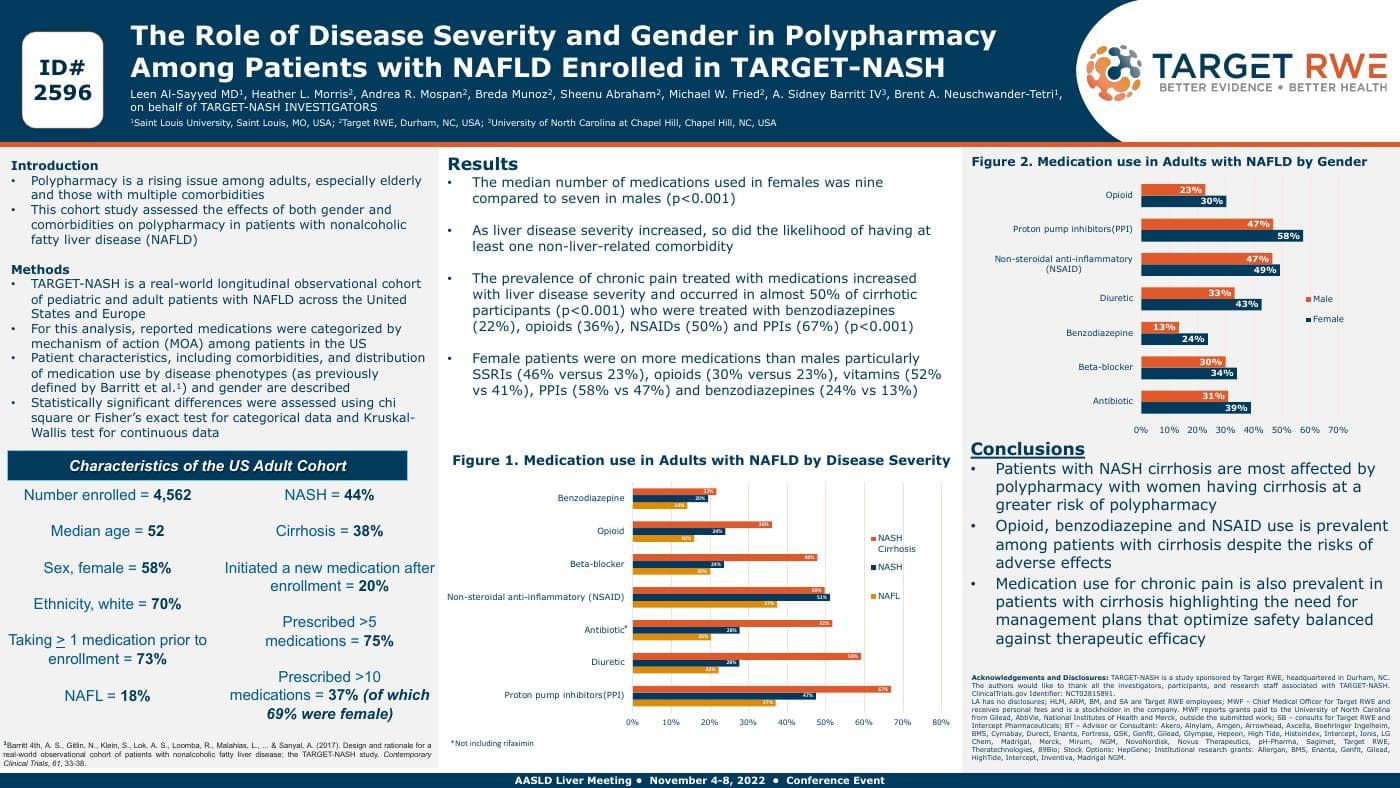
The factors driving polypharmacy in NAFLD patients—particularly the interaction between disease severity, sex, and medication burden—had not been characterized at scale in a real-world population, creating a gap in the safety surveillance and drug development planning context for NAFLD therapeutics.
Solution
The TARGET-NASH registry was analyzed to describe medication use patterns by disease severity and sex, characterizing polypharmacy prevalence, mechanism-of-action categories, and the predictors of medication burden using descriptive statistics and comparative testing.
Impact
Characterizing that polypharmacy burden increases sharply with NAFLD severity—and that women with cirrhosis are particularly affected—provides drug developers with actionable concomitant medication context for NAFLD trial design and safety monitoring.
Use Cases / Links
Polypharmacy burden characterization in NAFLD for clinical trial safety planning, Sex- and severity-stratified medication use analysis for DDI risk assessment, Concomitant medication profiling supporting NAFLD drug development eligibility design