Regional, racial/ethnic, and socioeconomic disparities and treatment outcomes in patients with hepatocellular carcinoma (HCC) in the US
Challenge
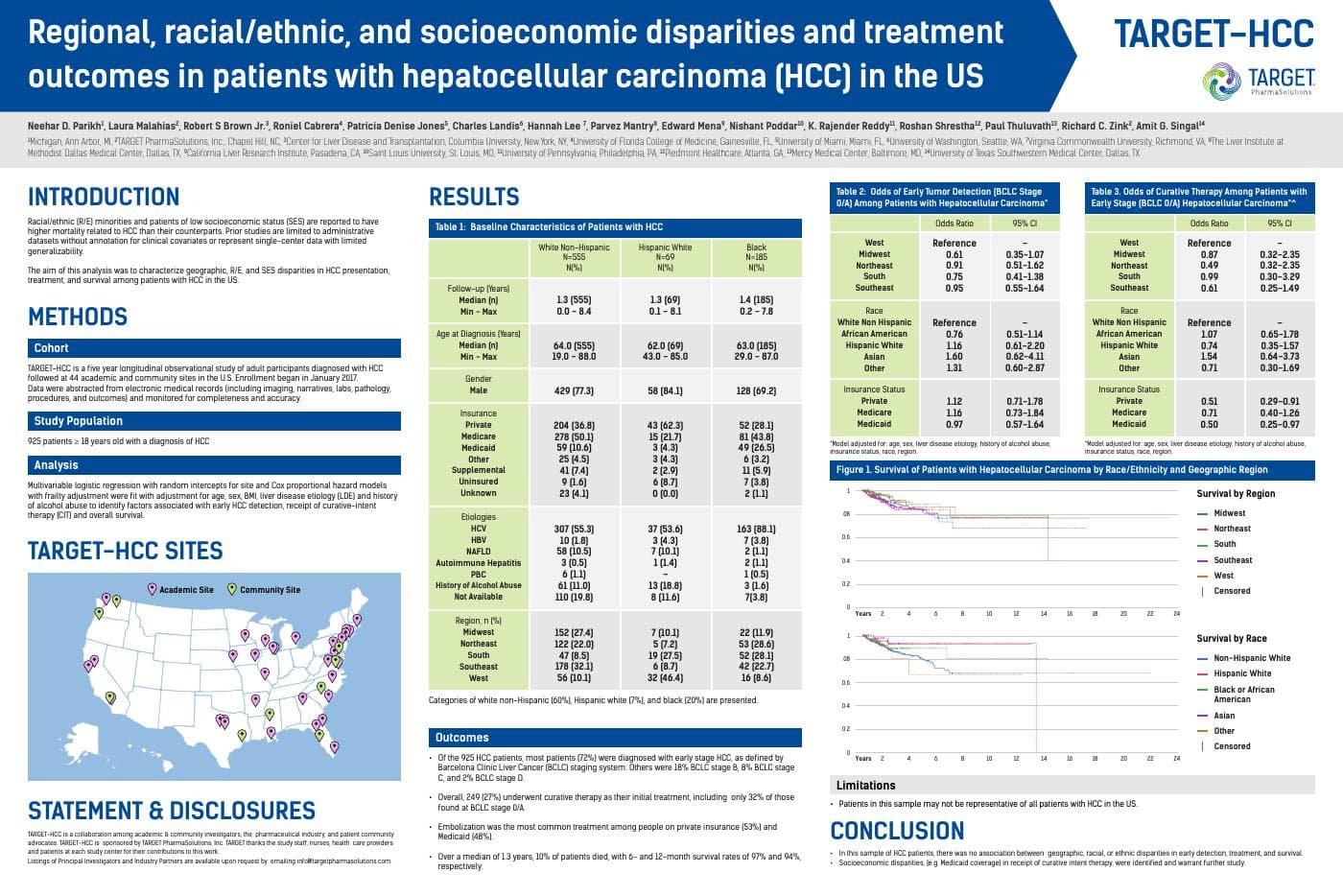
Administrative database studies of HCC disparities lacked clinical covariates, and single-center studies lacked generalizability, leaving a gap in real-world evidence on whether racial, ethnic, socioeconomic, and geographic disparities actually translate into differences in HCC treatment receipt and outcomes when clinical confounders are properly controlled.
Solution
The TARGET-HCC cohort was analyzed using multivariable logistic regression and Cox proportional hazard models with random intercepts for site to assess the association of race, ethnicity, insurance status, and geographic region with early tumor detection, curative intent therapy receipt, and overall survival.
Impact
Demonstrating that socioeconomic disparities in curative intent therapy receipt persist after clinical adjustment—while racial/ethnic disparities in this cohort did not reach significance—provides actionable, clinically adjusted equity evidence for sponsors designing trials with diverse enrollment requirements and health equity commitments.
Use Cases / Links
Racial, ethnic, and socioeconomic disparity analysis in HCC for diverse trial enrollment design, Real-world equity evidence in HCC for health disparities-aware drug development programs, Clinically adjusted outcomes analysis supporting health equity commitments in oncology development