Changes in The Fibrosis-4 (FIB-4) Score Accurately Reflects The Disease Trajectory of Metabolic Dysfunction Associated Steatotic Liver Disease
Authors: Andrea R. MospanBreda MunozMichael W. Fried, MD, FAASLD
Solution
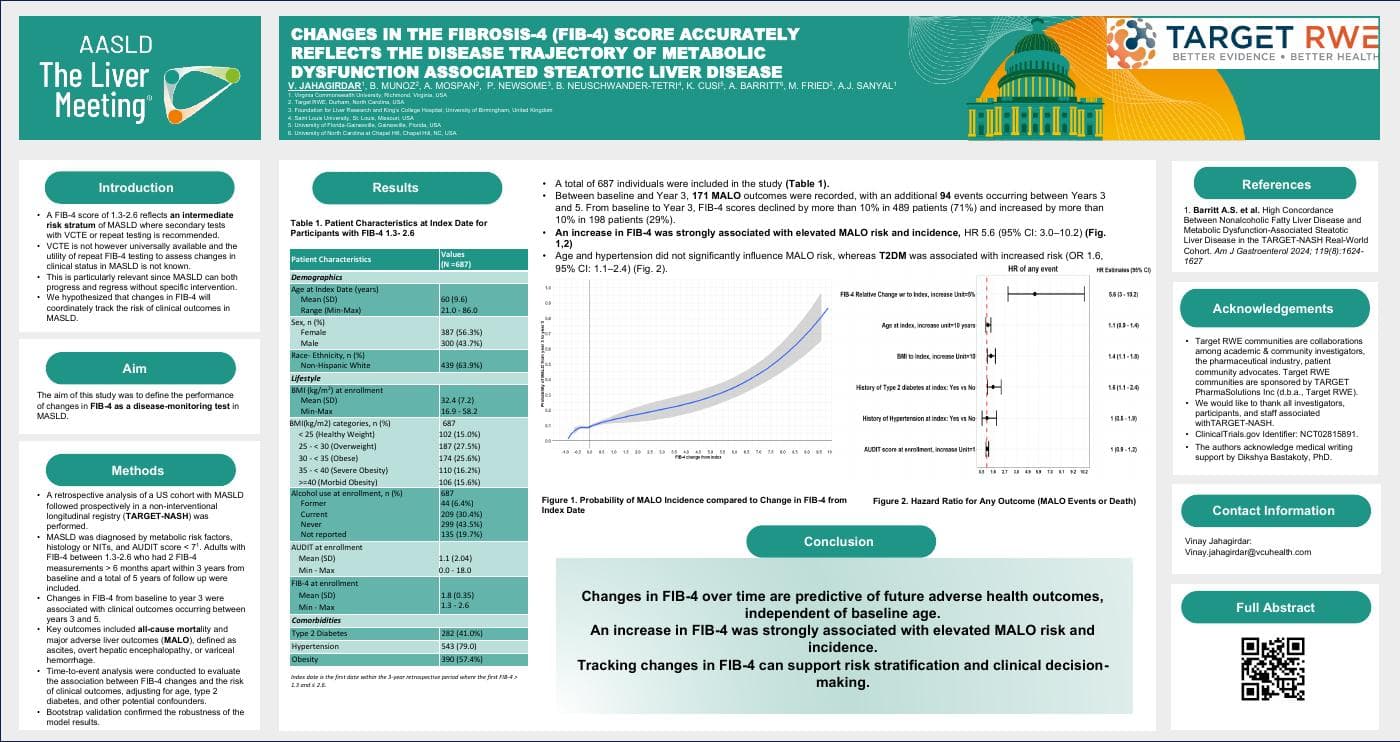
A retrospective analysis of TARGET-NASH patients with FIB-4 values in the intermediate range and ≥2 measurements over three years was conducted, with time-to-event models linking FIB-4 change categories to MALO and mortality outcomes in the subsequent follow-up period.
Impact
Demonstrating that FIB-4 trajectory accurately predicts future adverse liver outcomes provides regulatory-grade evidence for the use of longitudinal FIB-4 as a monitoring and enrichment tool in MASLD trials, and supports its use as a surrogate endpoint component in real-world drug evaluation.
Use Cases / Links
Longitudinal NIT validation for MASLD disease monitoring and trial enrichment, FIB-4 trajectory as a surrogate for clinical outcomes in drug development, Real-world endpoint benchmarking for non-invasive MASLD monitoring strategies